There was a time when the easiest way to identify a luxury product was to look at its price.
The number did most of the talking.
Today, that is becoming a surprisingly weak test.
A $20,000 object can be ordinary. A $200 fragrance can be clever. A watch from a relatively young independent brand can say more about the future of luxury than a familiar Swiss name with another variation of the same complication.
That is why September 2026 is interesting.
The luxury industry is increasingly being forced to answer a difficult question: what exactly are people paying for now?
Sometimes it is craftsmanship. Sometimes scarcity. Sometimes technology. Sometimes heritage. Increasingly, it is the story connecting all four.
The most interesting releases so far this month reflect that shift.
There is a watch built from tantalum and decorated with hand-executed tremblage that brings Chinese calligraphy into conversation with Swiss watchmaking. There is a new interpretation of Van Cleef & Arpels’ famous Alhambra in a pink enamel whose color comes from fine gold particles rather than conventional pigments. Boucheron has turned ivy into high-jewelry sculpture. Prada has approached fragrance through an unusual interpretation of sweetness. And Gaggenau has taken the humble oven and treated it almost like architecture.
None of these products is interesting merely because it is expensive.
That is the point.
Here are five new luxury products from September 2026 that actually deserve a closer look.
1. Atelier Wen × Massena LAB Inflection Shuò — The Watch That Makes Luxury Feel Less Geographically Predictable
There are watches that demonstrate wealth.
And then there are watches that demonstrate where the watch industry might be going.
The Atelier Wen × Massena LAB Inflection Shuò belongs much more comfortably in the second category.
The collaboration was unveiled in early September 2026 and is now being offered as a highly limited 50-piece series. Atelier Wen’s official product page lists the watch at HK$326,300, with allocations handled through an application process and deliveries scheduled to begin in January 2027.
That delivery detail matters.
This is not a watch you simply add to an online basket and expect next week. The product has been launched and orders are being allocated, but physical delivery comes later. In other words, September is the moment of commercial introduction rather than the moment when the watch reaches every owner’s wrist.
And what a watch it is.
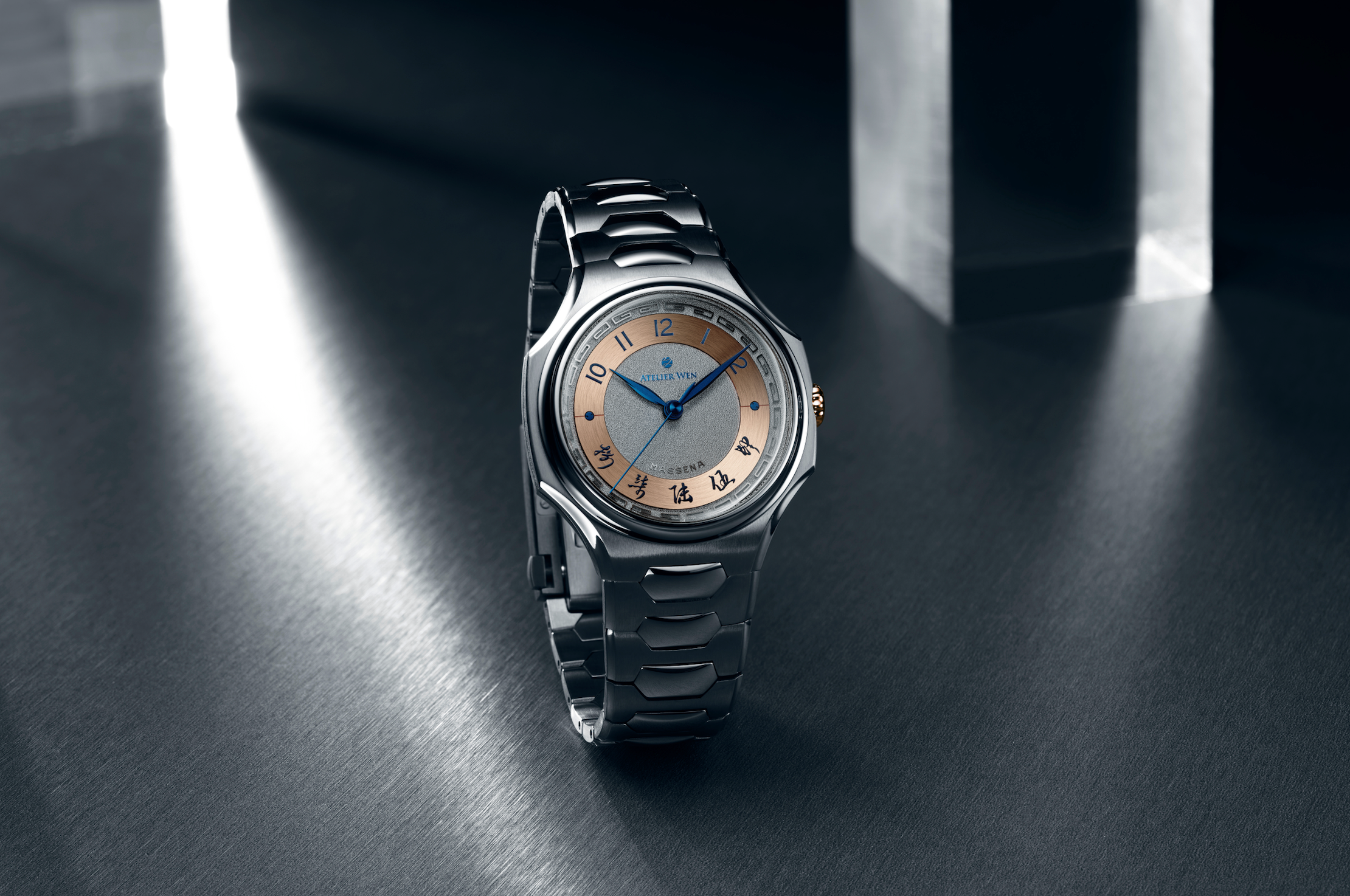
The case and integrated bracelet are made from 99.9 percent pure tantalum, a material prized for its distinctive blue-grey appearance, corrosion resistance and difficulty of machining. The case measures 40mm across and 10.2mm thick, with mixed concave and convex surfaces and extensive contrasting finishes.
But the dial is where the story becomes considerably more interesting.
It is made from solid 18-karat gold and finished using hand-executed tremblage, a demanding decorative technique in which a graver creates thousands of tiny irregular facets across the surface. Atelier Wen says each square millimetre is worked individually, and that the technique can take several days for a single dial.
Then comes the cultural conversation.
The dial combines custom Arabic numerals with hand-calligraphed Chinese numerals in a California-dial-inspired layout. The Arabic numerals were designed by William Massena, while the Chinese characters were created by a Hong Kong calligrapher.
Underneath is a customized Girard-Perregaux GP03300 automatic movement, with bridges decorated with motifs inspired by the visual language of wind in historical Chinese paintings.
Why it caught our attention
The clever part isn’t the price tag.
It is the fact that the watch refuses to fit neatly into the old geographical hierarchy of luxury watchmaking.
For decades, the industry could be described rather simply: Switzerland represented high watchmaking, while other countries were largely positioned as consumers or manufacturers working under different levels of Swiss influence.
Atelier Wen is proposing another model.
Its identity is explicitly rooted in Chinese culture and craftsmanship, while the Inflection Shuò uses Swiss expertise, a Swiss movement and a collaboration with Massena LAB to create something that does not feel like an imitation of European luxury.
The result is more interesting than a simple “East meets West” marketing phrase.
It is a product in which the two traditions are visible at the same time.
The limitation
At HK$326,300, this is serious collector territory.
And because only 50 pieces are being produced, it is not attempting to become a mainstream luxury watch.
That is perfectly fine.
Its importance is not measured by how many people can buy it.
It is measured by whether the product changes the conversation.
The Scarlet Kingdom verdict: The most intellectually interesting luxury watch of the month so far. It treats Chinese identity not as decoration but as a genuine part of the watch’s design language.
2. Van Cleef & Arpels Pink Alhambra — When an Icon Changes Without Losing Its Identity
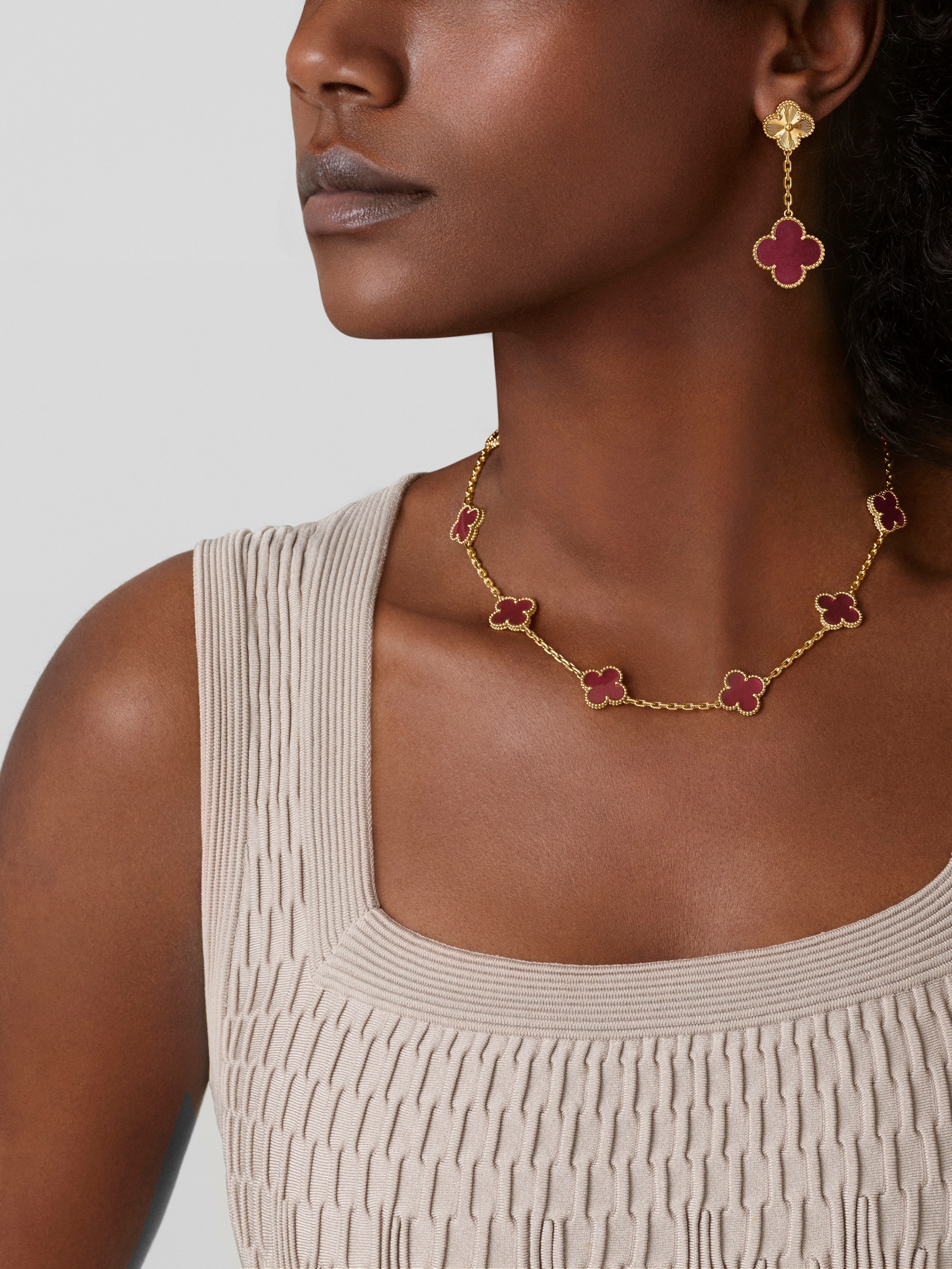
Few luxury motifs are as recognizable as the Alhambra.
Introduced by Van Cleef & Arpels in 1968 and inspired by the four-leaf clover, the motif has spent decades moving through different stones, metals and interpretations without losing its basic visual identity.
In September 2026, something genuinely unusual happened.
Enamel entered the Alhambra story for the first time.
Van Cleef & Arpels’ new pink Alhambra pieces use translucent pink enamel developed through several years of research and development in the maison’s workshops. The official description explains that the intense color is inspired by the historic “gold-ruby” technique, in which fine gold particles rather than conventional pigments generate the color.
The new group consists of five creations across the Vintage and Magic Alhambra families.
Among them are a Vintage Alhambra bracelet, a Vintage Alhambra necklace and pendant, and Magic Alhambra earrings. The maison’s Monaco site currently lists the five-motif Vintage Alhambra bracelet at €5,600, the Magic Alhambra earrings at €9,350, the 10-motif Vintage Alhambra necklace at €10,700, and the Vintage Alhambra pendant at €3,350.
The collection was being promoted from September 1, with fashion coverage following immediately afterward.
Why it caught our attention
Because this is exactly how a heritage product should evolve.
Van Cleef could have introduced another stone.
Another shade of mother-of-pearl.
Another diamond configuration.
Instead, it changed the material itself.
The pink enamel is translucent and contains tiny bubbles that give each motif depth and individuality. The curved surface of the Alhambra motif then interacts with light differently from an opaque stone.
That means the change is not merely chromatic.
It changes the way the object behaves visually.
And there is something particularly appropriate about using enamel here.
Enamel has an extraordinarily old history in decorative arts, but within the Alhambra it suddenly feels modern because of its transparency and saturated color.
This is one of the more subtle luxury lessons of September.
Innovation does not always mean putting a screen inside something.
Sometimes innovation means taking an old technique and making it behave differently.
The price question
Is €5,500 for a small five-motif bracelet expensive?
Obviously.
But that is not the most interesting question.
The more useful question is whether the material development creates a meaningful difference from existing Alhambra pieces.
Here, the answer is yes.
The color is not simply painted onto the surface. The maison says the desired shade required years of research to establish the correct particle size, shape and concentration of gold in the enamel.
That is a level of technical development that makes the pink feel more than a seasonal color choice.
The Scarlet Kingdom verdict: A remarkably disciplined reinvention of a famous icon. The Alhambra does not need to become unrecognizable to become new.
3. Boucheron Lierre de Paris — The Jewelry Collection That Turns Ivy Into Architecture

Nature-inspired jewelry is hardly new.
Luxury houses have been turning flowers, leaves, animals and vines into precious objects for centuries.
Which makes Boucheron’s Lierre de Paris particularly interesting for a different reason: the collection understands that the challenge is not finding another natural motif. It is making nature feel physically alive.
The collection was among the September 2026 jewelry launches highlighted by Elle, which describes it as a nine-piece collection inspired by ivy and one of Boucheron founder Frédéric Boucheron’s favorite plants.
The house’s current U.S. new-arrivals page lists pieces including a Lierre de Paris ring at $11,450, a pendant at $12,000, a necklace at $70,200, asymmetrical ear clips at $57,200, a multi-wear pendant earring at $93,600, and a three-brooch set at $90000.
The collection draws on an ivy motif found in Boucheron’s archives as far back as 1870. Rather than simply reproducing leaves, the new designs use diamond-pavé structures and open forms to suggest ivy winding around the body.
Why it caught our attention
The jewelry industry has a recurring problem.
The more precious a material becomes, the easier it is for the design to become visually static.
A diamond can sparkle.
Gold can glow.
But a leaf has to move.
Boucheron’s solution is to make the jewelry behave more like the thing it represents.
The asymmetry is important.
So is the possibility of wearing certain pieces in multiple ways.
The result is less “diamond leaf necklace” and more an attempt to create an object that looks as though it is growing across the wearer.
That distinction matters.
Luxury jewelry is increasingly competing with art and collectible design for attention. The most interesting pieces are therefore not necessarily the ones containing the most gemstones.
They are the ones with the strongest visual idea.
The catch
At prices reaching well into five figures, this is not everyday jewelry.
But it is also not trying to be.
Lierre de Paris belongs to a category where the object is part adornment, part sculpture and part house history.
The important thing is that the collection gives the wearer something to interact with.
It does not simply say: look at my diamonds.
It says: look at how this thing moves.
The Scarlet Kingdom verdict: The strongest jewelry collection here for pure design thinking. Boucheron has turned an old botanical idea into something that feels closer to wearable architecture.
4. Prada Paradoxe Sweet Chemistry — The Fragrance That Understands the Problem With “Sweet”
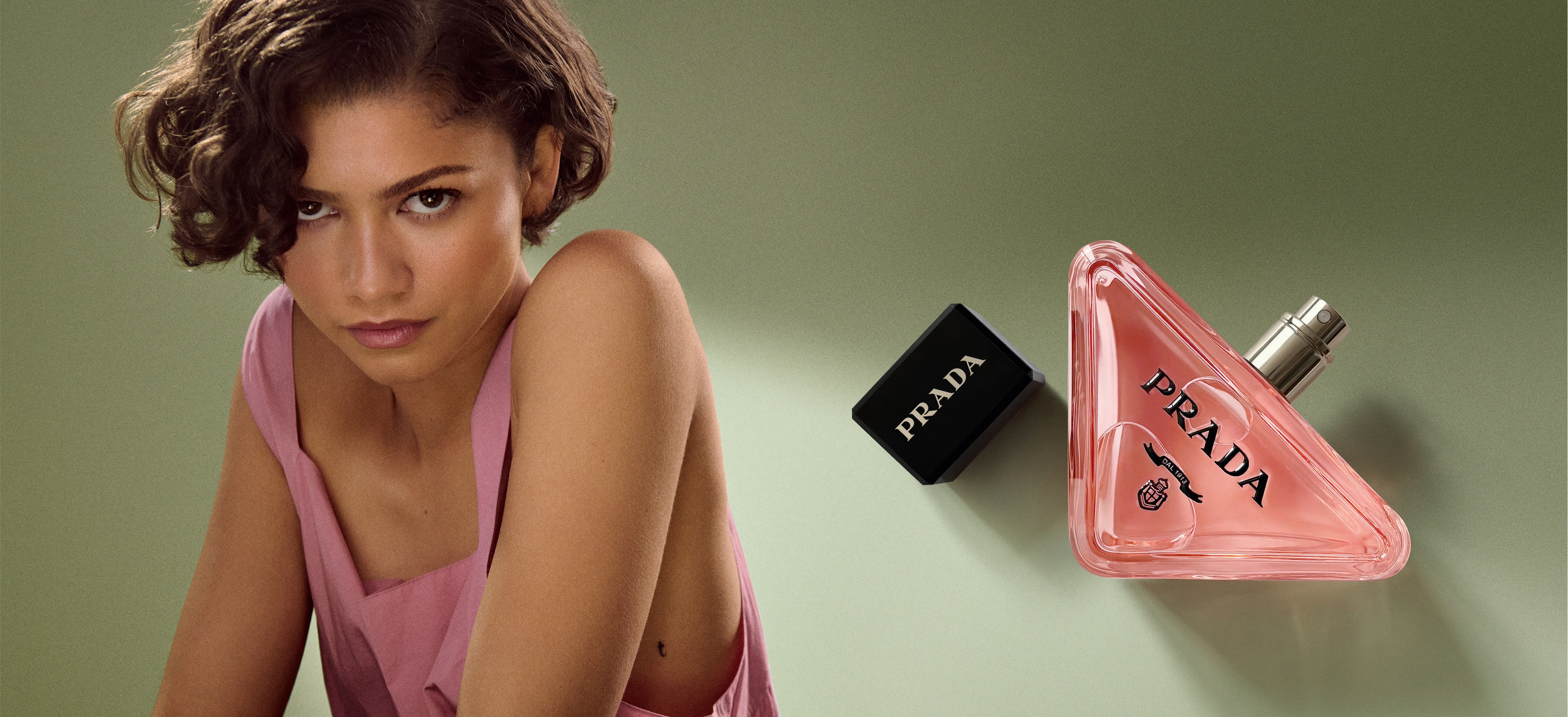
Perfume is experiencing its own identity crisis.
For years, “sweet” has been one of the easiest routes to mass appeal: vanilla, caramel, berries, sugar, creamy woods and gourmand notes have become familiar territory.
So what happens when Prada tries to make sweetness interesting again?
Enter Paradoxe Sweet Chemistry.
Prada Beauty identifies the fragrance as a new fruity-floral scent, while Prada’s official product pages list the 30ml version at €90, the 50ml at €128, and the 90ml at €175 in Europe. A 100ml refill is listed at €150.
The fragrance was being introduced at the beginning of September 2026, with September 4 coverage highlighting its new interpretation of sweetness and its association with Zendaya.
The composition revolves around three particularly important ideas: a blackcurrant syrup accord, orange blossom absolute and a creamy neroli milk accord. Prada describes the result as a balance between fruity, floral and sweet elements.
Why it caught our attention
Because the interesting part is not the existence of another Prada fragrance.
It is the construction of contradiction.
Blackcurrant syrup is rich and fruity.
Orange blossom introduces brightness.
Neroli milk pushes the familiar neroli idea toward something creamier and softer.
The result is designed around tension rather than simply piling sweetness on top of sweetness.
That is increasingly important in contemporary fragrance.
Consumers have become more knowledgeable. They can distinguish notes, concentrations and perfume families. They also encounter hundreds of fragrance recommendations through social media.
The product therefore needs an idea.
Sweet Chemistry has one.
It asks whether sweetness can feel structured rather than childish, creamy rather than sugary, and sophisticated without becoming austere.
The technology of the bottle matters too
Prada’s fragrance system continues to emphasize refillability, which is increasingly becoming part of the luxury beauty conversation.
The official Prada product page lists a refill format alongside the fragrance itself.
That is important because luxury fragrance has a strange relationship with waste.
The bottle is part of the fantasy.
It is also part of the environmental problem.
A refillable system attempts to preserve the object while reducing the need to replace the entire package every time.
It does not magically make luxury fragrance sustainable.
But it does make the ownership model more interesting.
The catch
At €175 for 90ml, this is unquestionably a prestige fragrance.
And whether its interpretation of sweetness feels genuinely new will ultimately depend on the wearer.
The fragrance market is crowded.
A clever note pyramid does not automatically create a memorable perfume.
The Scarlet Kingdom verdict: The most commercially accessible idea on this list. It is not reinventing perfume, but it shows how a major beauty house can make a familiar trend — sweetness — feel more deliberate.
5. Gaggenau Expressive Series GO470120 — The Luxury Product That Barely Looks Like a Product
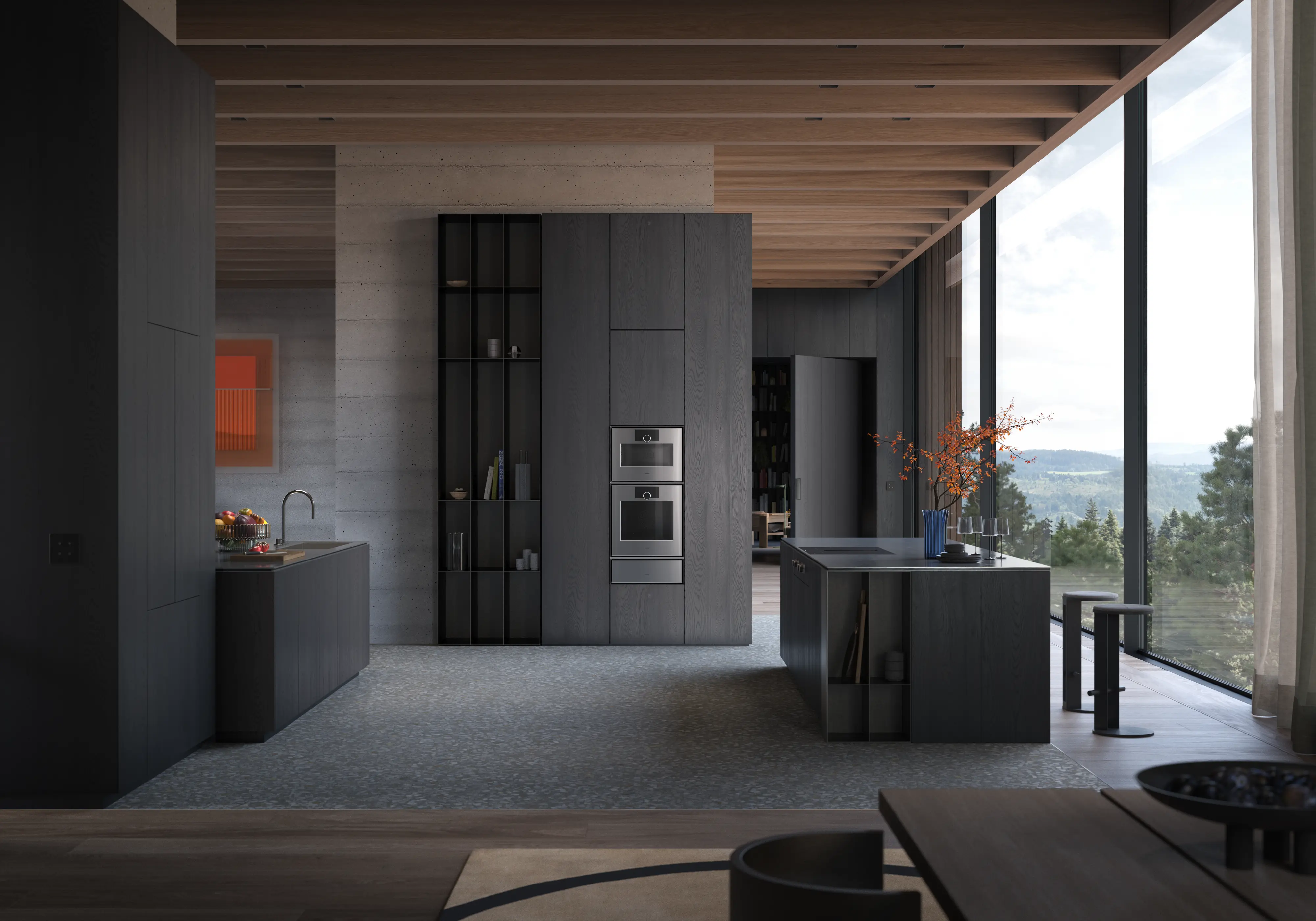
The most surprising item on this list is also the least glamorous.
It is an oven.
More specifically, the Gaggenau Expressive Series GO470120, a 60cm built-in oven.
Gaggenau’s current product documentation describes a handleless full-glass door with electronic opening, a full-touch display with stainless-steel control ring, user detection, automatic programmes and pyrolytic cleaning. The 77-litre oven offers 19 heating methods, including air frying, dehydrating, dough proving, a baking-stone function and a rotisserie spit.
Gaggenau unveiled its new Expressive and Minimalistic oven designs in Singapore on September 2, 2026, in what was described as the company’s first major oven design change in nearly two decades.
A 2026 Austrian Gaggenau price document lists the related Expressive steam oven GS471120 at €7,950, illustrating the price territory of the range, although prices vary by model and market.
Why it caught our attention
Because this is where luxury quietly becomes architecture.
The traditional luxury appliance was often designed to announce itself.
Huge handles.
Polished metal.
A recognizable professional-kitchen aesthetic.
Gaggenau’s Expressive series takes another approach.
The controls become part of the surface.
The glass is architectural.
The stainless-steel ring becomes a design object.
The appliance is intended to sit inside the kitchen rather than dominate it.
That is not simply an aesthetic decision.
It reflects how high-end homes are changing.
The kitchen is increasingly treated as a social room rather than a service area. Interior designers want appliances that integrate with cabinetry, stone, wood and architectural surfaces.
Luxury, in other words, is moving from display to integration.
The most expensive object in the room does not necessarily need to look expensive.
The technology is quietly substantial
The GO470120 offers automatic programmes and recommendations, remote monitoring through Home Connect, cooking-time estimation when using the core temperature probe and even voice-assisted door opening.
But the product’s intelligence is deliberately hidden behind a restrained interface.
That is significant.
We have spent years talking about smart homes as collections of devices.
The more interesting future may be homes where technology becomes invisible.
The appliance knows what it is doing.
The user does not necessarily need to think about the technology.
The catch
An oven costing several thousand euros is difficult to justify purely on cooking performance.
There are excellent ovens for dramatically less money.
The premium here is partly about precision, design, integration, materials, service and the experience of living with the appliance.
That does not make it bad value.
It simply means its value belongs to a different category.
The Scarlet Kingdom verdict: The most revealing product on the list. It demonstrates that modern luxury increasingly means technology that disappears into the environment rather than technology that demands attention.
What These Five Releases Tell Us About Luxury
Look at these products together and a pattern begins to appear.
It is not “quiet luxury.”
It is not maximalism.
It is not even technology.
The stronger pattern is intentionality.
The Atelier Wen watch does not use Chinese references because they are fashionable. Chinese calligraphy, decorative motifs and craftsmanship are integrated into its construction.
Van Cleef’s pink Alhambra does not simply add pink to an existing palette. The maison developed a specific enamel process over several years to achieve the color.
Boucheron does not simply decorate jewelry with leaves. It attempts to reproduce the movement and irregularity of ivy.
Prada does not simply make another sweet fragrance. It builds sweetness around contrasting ingredients and a more contemporary olfactory structure.
Gaggenau does not simply put more technology into an oven. It hides the technology inside a cleaner architectural interface.
That may be one of the biggest changes in luxury.
The consumer is becoming less impressed by the fact that something is expensive.
They want to know why it is expensive.
What did the money actually produce?
More craftsmanship?
A better material?
A more thoughtful object?
A meaningful piece of history?
A new technical possibility?
A better experience?
The best luxury products are increasingly expected to have an answer.
The Rise of Cultural Specificity
There is another pattern worth noticing.
The most interesting products increasingly come with strong cultural identities.
Atelier Wen’s watch is perhaps the clearest example. Its Chinese identity is not an afterthought. It is embedded in the numerals, calligraphy, decorative motifs and overall philosophy of the object.
That matters in a luxury market where consumers in Asia are not simply waiting for European houses to tell them what luxury should look like.
Indian luxury is undergoing a similar transformation.
The September launch of Abu Jani Sandeep Khosla’s first jewellery collection, Iconic Jewels, is another example of an established Indian couture house moving its design language into a new luxury category. The collection draws on Patola, Chikankari and Indian symbolic references and is being presented at the designers’ Mubarak Baug flagship in Mumbai.
It did not make our final five because pricing for the collection was not sufficiently transparent for the kind of product-by-product comparison required here.
But editorially, it is worth watching.
It reinforces the larger point: the geography of luxury is becoming much more complicated.
Which One Actually Matters Most?
#5 — Prada Paradoxe Sweet Chemistry
It is polished, accessible by luxury-fragrance standards and commercially intelligent.
But fragrance is an intensely crowded market, and the underlying idea — reinventing sweetness — has plenty of competition.
Interesting, yes.
Potentially influential, perhaps.
Industry-defining? Too early.
#4 — Gaggenau Expressive Series GO470120
This is a fascinating example of luxury moving into the architecture of everyday life.
It shows where premium home technology is heading: integrated, intelligent and visually restrained.
Its limitation is simple.
Most consumers will never need this level of appliance.
#3 — Boucheron Lierre de Paris
This is where jewelry becomes sculpture.
The ivy motif is historic, but the execution gives it movement and flexibility.
It could have lasting influence because the industry increasingly needs to make jewelry feel like design rather than merely valuable material.
#2 — Van Cleef & Arpels Pink Alhambra
The Alhambra is already one of the most recognizable symbols in luxury jewelry.
Introducing enamel for the first time is therefore a meaningful decision.
The technical story behind the pink color makes it more than a seasonal refresh.
It demonstrates how a heritage icon can evolve without destroying the reason people loved it in the first place.
#1 — Atelier Wen × Massena LAB Inflection Shuò
This is the one.
Not because it costs HK$326,300.
Not because only 50 exist.
And not because it combines a Swiss movement with an exotic metal.
It is number one because it represents something larger.
It challenges the idea that high watchmaking has to be culturally European to be genuinely high watchmaking.
The Inflection Shuò takes Chinese cultural language seriously while using the technical vocabulary of haute horlogerie. It places hand-executed tremblage, Chinese calligraphy, tantalum construction and a Girard-Perregaux movement inside one object.
That is more than collaboration.
It is a statement about who gets to define luxury.
And that question is going to become increasingly important.
The Scarlet Kingdom Verdict: What Does Luxury Mean in September 2026?
Perhaps the most interesting thing about these five products is what they refuse to tell us.
They do not say that luxury is becoming cheaper.
They do not say that luxury is becoming quieter.
They do not say that luxury has abandoned technology, heritage or extravagance.
Instead, they suggest that luxury is becoming more specific.
The best products have a reason for every major decision.
The watch uses tantalum because the material creates a particular physical and visual challenge.
The Alhambra uses gold-derived pink enamel because the maison wanted to push its historic technique into unfamiliar territory.
Boucheron turns ivy into moving sculpture because a natural form should not feel static.
Prada makes sweetness contradictory because straightforward sweetness has become too easy.
Gaggenau hides intelligence inside architecture because the most sophisticated technology may be the technology you barely notice.
That is what makes these products worth discussing.
Luxury in 2026 is increasingly less about asking, “How expensive is it?”
The more interesting question is:
“What happened here that could not have happened five years ago?”
Sometimes the answer is a material.
Sometimes it is technology.
Sometimes it is culture.
Sometimes it is craftsmanship.
And sometimes it is simply a designer looking at something everyone thought they understood and deciding to see it differently.
That is the kind of luxury The Scarlet Kingdom will always find worth watching.