There is always one moment before fashion week properly begins when the schedule stops looking like a calendar and starts looking like a story.
For NYFW Spring 2027, that story is beginning with Diane von Furstenberg.
The Spring/Summer 2027 New York season officially runs from September 10 through September 15, 2026, with roughly 70 runway shows and designer presentations on the CFDA’s preliminary official schedule. Ralph Lauren and Coach will present on September 9, before the official week begins, while Thom Browne closes the official calendar on September 15.
But the collection I will be watching most closely is not simply the largest American name on the calendar.
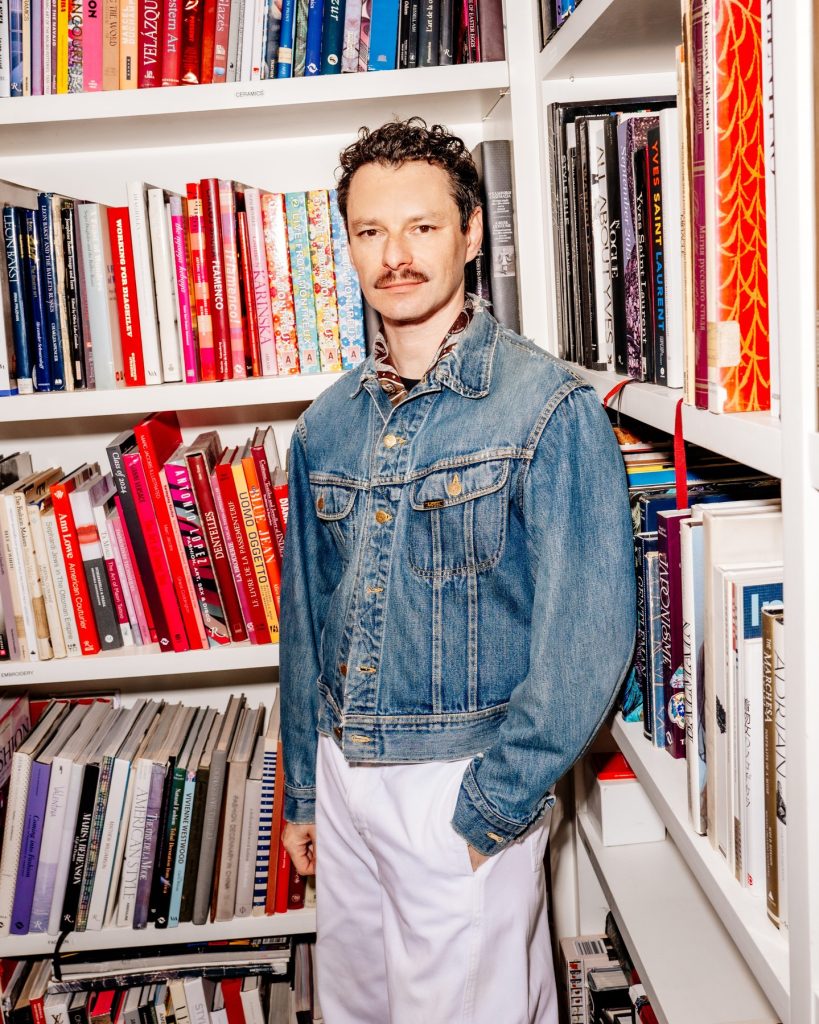
It is Diane von Furstenberg’s first collection under Henry Zankov, the New York designer appointed artistic director of the house in May.
The reason is simple: this is not merely a new collection. It is a test.
Can one of America’s most recognizable fashion identities be made culturally relevant again without turning its heritage into costume? Can a designer known for expressive knitwear, color and texture translate that vocabulary into a house whose mythology was built around movement, print, independence and one extraordinarily influential dress?
And perhaps most interestingly: what happens when an emerging designer is asked not to create a new brand, but to reinterpret an old one?
The answer will arrive on September 10.
And that makes this particular NYFW Spring 2027 collection one of the season’s most consequential appointments before a single model has walked the runway.
Why This Collection Arrived at Exactly the Right Moment
Diane von Furstenberg has never been an anonymous fashion label.
The house is associated with one of the most recognizable garments in modern womenswear: the wrap dress. But the deeper DVF identity has always been larger than the dress itself. The brand describes its vocabulary through color, print, movement, femininity and confidence, with clothing designed to feel both expressive and functional.
That creates an unusually difficult problem for any new creative leader.
A designer arriving at an obscure label can invent the mythology.
A designer arriving at DVF inherits one.
Henry Zankov is therefore walking into a house where the archive is not merely an archive. It is part of the public imagination.
His appointment is particularly intriguing because he is not an outsider parachuted into the brand.
Zankov worked at Diane von Furstenberg beginning in 2014, spending several years at the company before establishing his own label. His independent work became known for expressive knitwear, strong color and playful graphic treatments. In 2024, he won the CFDA’s Google Shopping American Emerging Designer of the Year award for Zankov.
Now the relationship has come full circle.
After returning to DVF for a capsule collection in 2025, Zankov was appointed artistic director in May 2026. The newly created role gives him responsibility for the house’s overall creative vision, including collections and visual identity.
That is a considerably bigger assignment than designing a particularly good season of clothes.
It means defining what DVF is now.
And that is why this collection matters.
What We Actually Know Before the Runway
There is an important distinction to make here.
The collection has not yet been presented as of September 6, 2026. Therefore, there are no responsible conclusions to make about its finished silhouettes, final color palette, runway casting, accessories, footwear or show production.
Any article claiming otherwise at this point would be describing a collection that the public has not seen.
What can be verified is the framework surrounding it.
The official CFDA schedule places Diane von Furstenberg at the beginning of the Spring 2027 calendar on Thursday, September 10. The collection is Zankov’s debut as artistic director.
The house itself confirms that Zankov’s first collection in the role will debut during New York Fashion Week on September 10.
That makes the absence of information almost part of the intrigue.
We know the ingredients.
We do not yet know the meal.
Still, the designer’s history gives us clues about the creative tension likely to define the collection.
Zankov’s own work has centered heavily on knitwear, color, texture and unusual approaches to construction. His previous collections have included body-conscious tubular dresses, chunky cardigans, controlled oversized silhouettes and tactile knitwear.
DVF, meanwhile, has historically built its appeal around fluidity, print, color and clothes that move with the wearer.
That overlap is significant.
It suggests that the interesting question is unlikely to be whether Zankov will make DVF look like Zankov.
The more interesting question is whether he can make DVF look unmistakably like DVF through his own design language.
The Designer Behind the Moment
Zankov’s career is useful because it explains why this appointment feels different from a conventional heritage-house succession.
He is not coming from a giant European luxury conglomerate with decades of experience running a global megabrand.
His reputation was built through a relatively independent New York practice.
That matters because his design vocabulary was formed around material rather than marketing.
His namesake label has made knitwear feel less like a supporting category and more like an entire design language. The clothes have explored saturated color, graphic pattern, tactile surfaces and silhouettes that use knit construction as an architectural element rather than simply a soft alternative to woven fabric.
The CFDA’s recognition of Zankov in 2024 also placed him within a broader group of designers helping define the next generation of American fashion.
That makes his move to DVF part of a larger industry pattern.
American fashion is increasingly interested in designers who have built distinctive identities on their own rather than simply moving through a sequence of corporate appointments.
And DVF appears to be betting that Zankov’s individuality can help restore individuality to the house itself.
The company’s own leadership has described the strategy as bringing the business back in-house, restoring authenticity to the product and reestablishing the brand’s global presence. Vogue reported that CEO Graziano de Boni brought the business back in-house in 2025 after four years of outsourced management.
That is not a minor operational detail.
It tells us what is at stake.
The collection is not simply about aesthetic renewal.
It is also about control.
The Detail That Could Change the Whole Collection
The obvious temptation is to imagine the Zankov DVF debut as a battle between two visual identities.
On one side: the DVF archive.
On the other: Zankov’s color and knitwear.
That would be too simplistic.
The more interesting possibility is synthesis.
DVF’s archive already contains a strong relationship between clothing and movement. Its official brand language emphasizes clean, unfussy silhouettes and dresses as central pieces of the wardrobe.
Zankov brings another kind of movement: the movement of fabric itself.
Knitwear stretches.
It hugs.
It drapes.
It folds.
It can make a graphic pattern become almost three-dimensional when worn.
This is where the collection could become genuinely interesting.
If Zankov uses knitwear merely as decoration, the appointment risks becoming a predictable exercise in branding.
If he uses knit construction to reconsider the way DVF clothes move around the body, the result could be considerably more meaningful.
That is the difference between adding a designer’s signature and allowing a designer to reinterpret a house.
Why This Could Be More Than a Heritage Revival
New York fashion is entering Spring 2027 at a moment when American heritage is suddenly having another conversation with younger consumers.
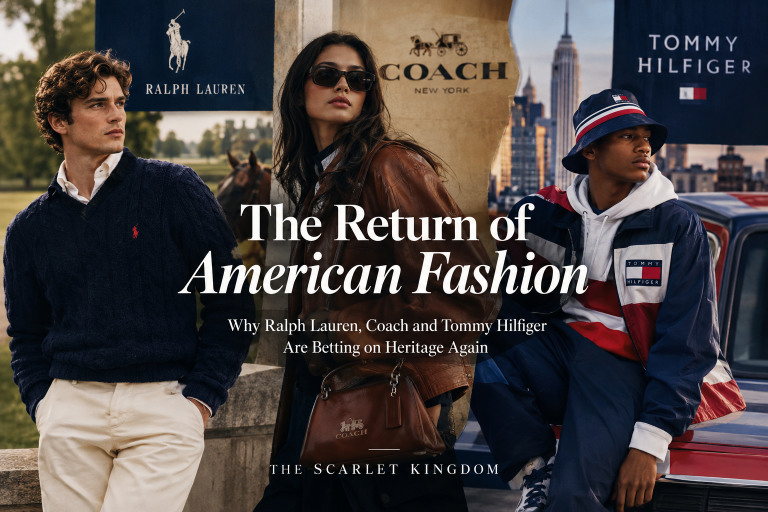
Reuters reported ahead of NYFW that American legacy brands are increasingly finding traction with Gen Z, while the global luxury market remains challenging. Ralph Lauren and Coach were highlighted as brands benefiting from renewed consumer interest, while Tommy Hilfiger is returning to the week after a period of stronger cultural visibility. Reuters also noted that spending growth among younger consumers in the U.S. and Asia has been helping support the market.
This is important.
Fashion houses do not exist in a vacuum.
A brand can have a beautiful archive and still become irrelevant.
The challenge facing established American names is therefore not necessarily how to make people remember them.
It is how to make people who did not grow up with them care.
DVF has an especially interesting opportunity here because its strongest codes are unusually legible.
Color.
Print.
The wrap dress.
Movement.
A confident woman.
These are not obscure fashion references that require a fashion-history degree to understand.
The problem is making those codes feel like something a woman — or a broader contemporary fashion audience — would actually want to wear now.
That is where Zankov’s generation of design thinking could matter.
NYFW Spring 2027 Is Becoming a Conversation About Relevance
The broader New York calendar reinforces the point.
The CFDA’s Spring 2027 schedule includes established American names such as Michael Kors, Tory Burch, Carolina Herrera, Calvin Klein Collection and Thom Browne alongside younger designers and newcomers. Tommy Hilfiger, Monse and threeASFOUR are returning, while Conner Ives, Magda Butrym, Sabyasachi and several emerging labels are new additions to the official schedule.
It is an unusually useful mixture of fashion’s past and future.
Tommy Hilfiger, for example, is staging its Spring 2027 show at The Plaza Hotel, a location with direct personal significance to the designer and a setting the brand is using to frame a renewed version of American style.
Sabyasachi’s appearance is significant from another direction: an Indian luxury designer returning to New York as part of the official calendar is another reminder that the definition of American fashion week has become considerably more international.
And then there is DVF.
Its challenge is more philosophical.
Can a distinctly New York fashion institution become new without becoming unrecognizable?
That question may ultimately be more interesting than any individual trend.
Five Things Fashion Editors Will Be Watching
Because the runway has not yet happened, these are not predictions disguised as facts. They are the five pressure points that will determine whether the collection succeeds.
1. The relationship with the wrap dress
Nobody expects Zankov simply to reproduce the classic.
The interesting question is whether the idea behind it — ease, movement, femininity and confidence — survives in a contemporary form.
If the wrap dress becomes a museum piece, the collection will feel nostalgic.
If its underlying construction philosophy is reinterpreted, it could become a starting point.
2. The use of knitwear
This may be the clearest Zankov fingerprint.
His independent career gives him a strong reason to push knitwear beyond sweaters and cardigans.
The real test will be whether that technical vocabulary expands DVF rather than narrowing it.
3. Color
Color is already fundamental to DVF’s identity, and it is central to Zankov’s work as well. The danger is obvious: simply turning the saturation dial upward would not constitute a new vision.
The more interesting possibility is using color structurally — to define shape, movement or the relationship between garments.
4. The balance between print and restraint
DVF has never been afraid of print.
But today’s luxury customer does not necessarily want an archive replica.
A modern DVF collection may need to understand when the print should dominate and when the garment should be allowed to breathe.
That tension could determine whether the collection feels contemporary or merely retro.
5. Whether the clothes look desirable without the mythology
This is perhaps the most important test.
Remove the name.
Remove the history.
Remove the celebrity associations.
Would the clothes still make someone want to wear them?
That is the question every heritage revival eventually faces.
The Business Story Hidden Inside the Clothes
There is another reason this collection deserves attention: fashion houses are increasingly being judged on whether creative change produces meaningful business relevance.
DVF’s return to an in-house structure under CEO Graziano de Boni is part of a broader attempt to regain control of the brand’s identity and distribution. Vogue reported that the company had spent four years with management outsourced to Chinese licensee Glamel before moving the business back in-house in 2025.
That makes the Zankov appointment strategically significant.
The designer is being asked to contribute not just clothes but coherence.
A modern luxury brand needs an identifiable visual world.
It needs products that work commercially.
It needs cultural relevance.
It needs an audience willing to talk about it.
And, increasingly, it needs a reason for younger consumers to care about a name they may know primarily from their parents’ wardrobes.
This is where fashion’s current obsession with archives becomes slightly more complicated.
An archive can be an asset.
It can also become a trap.
The goal is not to convince consumers that 1974 is happening again.
The goal is to make something created decades ago feel useful in 2026 and 2027.
The Collection’s Asian Dimension Is More Interesting Than It First Appears
For readers in Asia, particularly India, Japan and South Korea, the DVF story is worth watching for another reason.
The global luxury market is no longer a one-directional conversation in which European and American brands dictate taste to everyone else.
Reuters has pointed to continued spending momentum among younger consumers in Asia even as parts of the global luxury market face pressure.
That changes what heritage means.
A younger consumer in Mumbai, Seoul or Tokyo may encounter DVF through social media, vintage fashion, celebrity styling, resale platforms or contemporary retail rather than through the fashion-history narrative familiar to older American consumers.
For that audience, the brand’s history is context rather than obligation.
The clothes have to work on their own.
This is particularly relevant as New York Fashion Week itself becomes more international. The Spring 2027 schedule includes Sabyasachi and other international designers, while designers who typically show in London or Paris are participating in New York.
New York is increasingly functioning less as a closed American fashion institution and more as a global stage for different interpretations of American style.
That makes DVF’s renewal a much larger cultural experiment.
The New Luxury May Be Personality, Not Restraint
There is a broader fashion shift underneath all of this.
For several years, luxury conversation was dominated by quietness: minimal branding, muted colors, expensive-looking basics and clothes whose quality was supposed to speak without explanation.
That aesthetic is not disappearing.
But fashion is cyclical, and the pendulum is moving toward personality.
The Spring 2027 New York landscape is already being described through ideas including Western influences, longer silhouettes and sporty dressing, while established American brands are leaning into recognizable cultural codes.
DVF has an advantage in that environment.
It has never been particularly anonymous.
Its history is about women who enter a room looking like themselves.
The question for Zankov is whether that confidence can be expressed without becoming retro theater.
Perhaps the future of DVF is not minimalism versus maximalism.
Perhaps it is personality with discipline.
One More Symbolic Change: A Fur-Free NYFW
Spring 2027 also marks a policy change that gives the season broader significance.
Beginning with the September 2026 New York Fashion Week season, the CFDA’s official schedule prohibits animal fur from animals killed specifically for their pelts, including mink, fox, rabbit, chinchilla, coyote and raccoon dog, with an exemption for fur obtained by Indigenous communities through traditional subsistence hunting.
That policy applies across the official schedule rather than specifically to DVF.
Still, it matters to the context in which Zankov’s collection arrives.
Fashion is increasingly being asked to communicate not only taste but values, materials and production choices.
The most successful houses will probably be those capable of treating those questions as part of design rather than as an awkward footnote attached to it.
What Could This Mean for Spring 2027 Fashion?
The responsible answer is that we do not know yet.
The collection has not been shown.
But several possibilities are worth watching.
If Zankov successfully combines DVF’s print-and-movement heritage with his own approach to knitwear and color, we could see more fashion houses experimenting with the idea of heritage through material innovation rather than heritage through archival reproduction.
If the collection makes the wrap-dress philosophy feel contemporary, other brands may revisit similarly historic silhouettes without simply reproducing them.
If the color story resonates, it could contribute to the larger movement away from relentlessly neutral luxury.
And if the collection performs commercially, the industry will have another piece of evidence that consumers can be interested in heritage brands when those brands offer something new rather than merely reminding customers what they used to be.
Those are possibilities, not forecasts.
The evidence will come after September 10.
Why This Collection Matters Beyond Fashion
The most interesting fashion stories are rarely only about clothes.
They are about what people are willing to believe about themselves.
DVF became culturally powerful because it offered more than a dress. Its mythology was connected to independence, confidence and a particular idea of modern womanhood. The brand itself continues to describe its customer in terms of confidence, independence and self-assurance.
That makes Zankov’s task surprisingly contemporary.
Fashion’s relationship with identity has become more complicated.
Consumers can buy vintage.
They can buy resale.
They can wear multiple aesthetics.
They can discover an obscure designer on Instagram one week and a heritage fashion house the next.
The old hierarchy — famous brand at the top, customer at the bottom — is becoming less stable.
A brand now has to earn attention repeatedly.
That is why a designer’s appointment matters.
And that is why this particular NYFW Spring 2027 collection may become a story larger than its runway.
It is a test of whether a recognizable American fashion identity can be inherited without being fossilized.
The Scarlet Kingdom Verdict
So, does Diane von Furstenberg deserve to be considered the collection to watch at NYFW Spring 2027?
As of September 6, the answer is yes — with one important qualification.
We are talking about anticipation, not a completed critical verdict.
There is no runway review yet because there is no runway to review.
But the evidence for watching it is unusually strong.
DVF is returning to the official New York runway after years away. Henry Zankov is taking over the house’s complete creative direction in a newly created role. His own design career has already earned recognition from the CFDA. The brand has been brought back in-house as part of a broader effort to reclaim its identity. And the debut arrives during a New York Fashion Week increasingly interested in what American fashion means in an era of heritage revival, international influence and changing luxury consumption.
That is enough to make the collection important before we know whether the clothes are great.
The real test will be whether Zankov understands the difference between remembering Diane von Furstenberg and continuing Diane von Furstenberg.
Anyone can reproduce an archive.
The harder job is to make the archive feel alive.
On September 10, New York will find out whether Henry Zankov can do it.
And if he can, the most interesting thing about this NYFW Spring 2027 collection may not be the return of an old fashion house.