
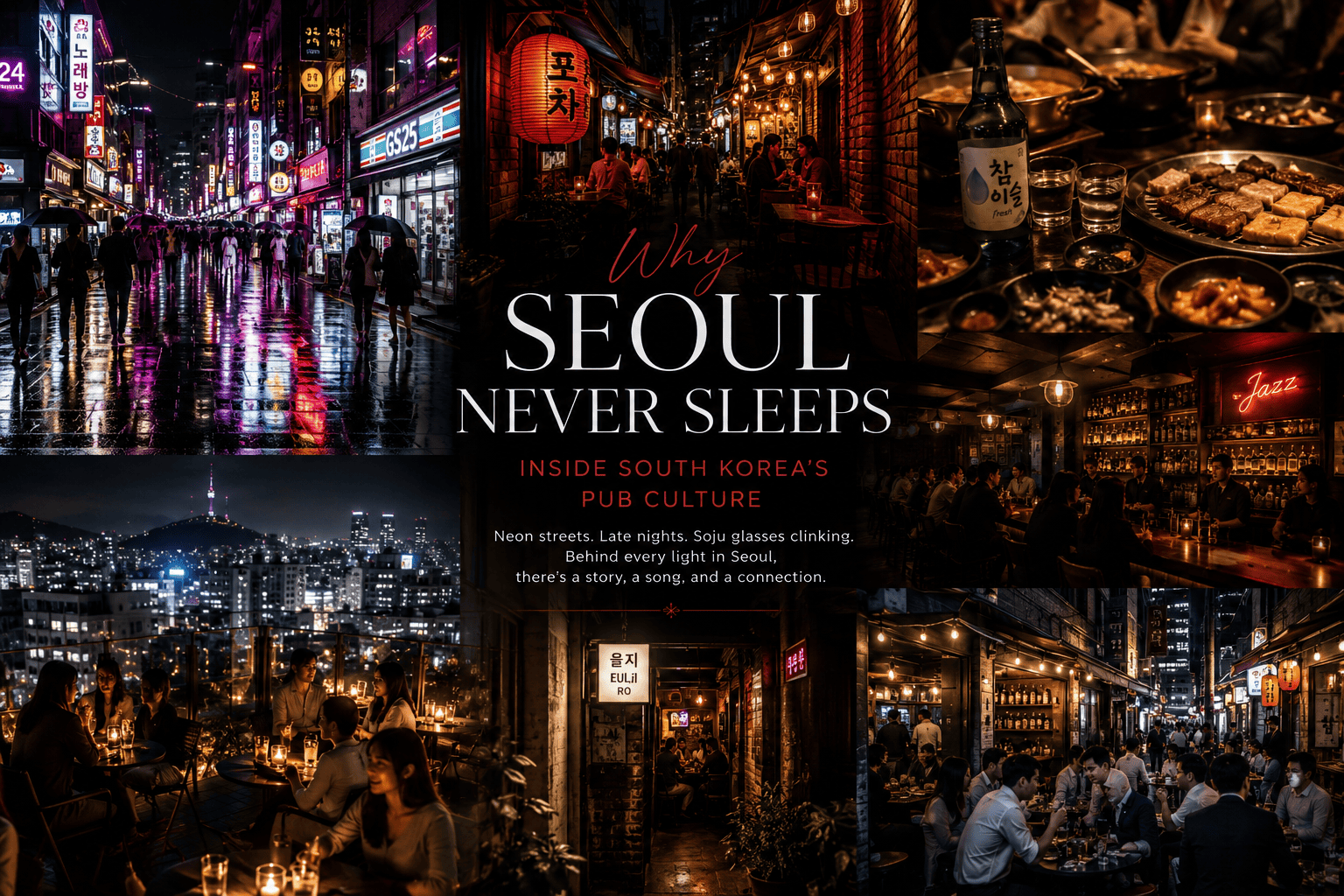
At 11:47 PM, Seoul is still glowing.
Neon reflections shimmer against rain-soaked streets in Hongdae while laughter spills from narrow alleyways lined with glowing signboards and tiny restaurants hidden above convenience stores. Office workers loosen their ties over sizzling Korean barbecue. University students crowd around small wooden tables. Somewhere in Itaewon, jazz echoes softly behind dimly lit cocktail bars while groups of friends raise glasses of soju beneath scarlet lanterns.
In South Korea, nightlife is not simply entertainment.
It is culture.
And perhaps nowhere is this more visible than inside the country’s unique pub culture — a world of smoky barbecue restaurants, poetic late-night conversations, rooftop drinks, neon-lit pojangmachas, luxury lounges, and tiny hidden bars where evenings seem to stretch endlessly into morning.
To outsiders, Korean pub culture may appear chaotic or dramatic. But underneath the noise is something far more beautiful: connection.
More Than Just Drinking
In many countries, pubs are places people visit occasionally.
In South Korea, drinking culture is deeply woven into social life itself.
After work, groups of employees often gather together for hoesik — company dinners that naturally continue into bars or pubs late into the night. Friends meet after long days to decompress over fried chicken and beer. Couples wander through Seoul’s glowing streets searching for cozy hidden bars tucked between cafés and karaoke rooms.
Alcohol becomes less about intoxication and more about atmosphere.
A table filled with shared dishes. The sound of grills sizzling. Tiny glasses clinking together. Stories becoming more honest as the night grows quieter.
South Korean nightlife thrives because it feels communal.
Nobody truly wants the evening to end.
The Beauty of Korean Pubs
Korean pubs are incredibly diverse.
Some are loud and energetic with K-pop music shaking the walls and neon signs glowing overhead. Others feel cinematic — dark interiors, jazz playing softly, candlelit cocktails served beside floor-to-ceiling city views.
And then there are the hidden places.
Tiny alleyway pubs in Seoul where warm yellow lights spill across wooden furniture. Intimate wine bars hidden behind unmarked doors. Rooftop lounges overlooking the Han River. Retro bars decorated like 1980s Korean apartments. Quiet whisky lounges where conversations move slower than time itself.
Every neighborhood has its own personality.
Hongdae feels youthful and artistic.
Gangnam feels sleek, luxurious, and modern.
Itaewon feels international and stylish.
Euljiro — perhaps one of Seoul’s most fascinating nightlife districts — feels like stepping into another era entirely. Industrial alleyways hide vintage bars, old printing shops, and aesthetic cafés that seem untouched by time.
In Seoul, finding the perfect pub often feels like discovering a secret world.
Why Food Matters So Much
One of the most beautiful parts of Korean pub culture is that drinking rarely exists without food.
In South Korea, meals are shared experiences. Even late at night, tables overflow with dishes designed for conversation — Korean fried chicken, spicy tteokbokki, grilled meats, seafood pancakes, ramen, kimchi stew.
Food slows the night down.
It creates comfort.
Unlike nightlife cultures centered purely around alcohol, Korean pubs often feel warmer and more intimate because people stay for hours talking, eating, laughing, and simply existing together.
There is elegance in that kind of slowness.
Soju: The Icon of Korean Nights
No discussion about Korean pub culture feels complete without mentioning soju.
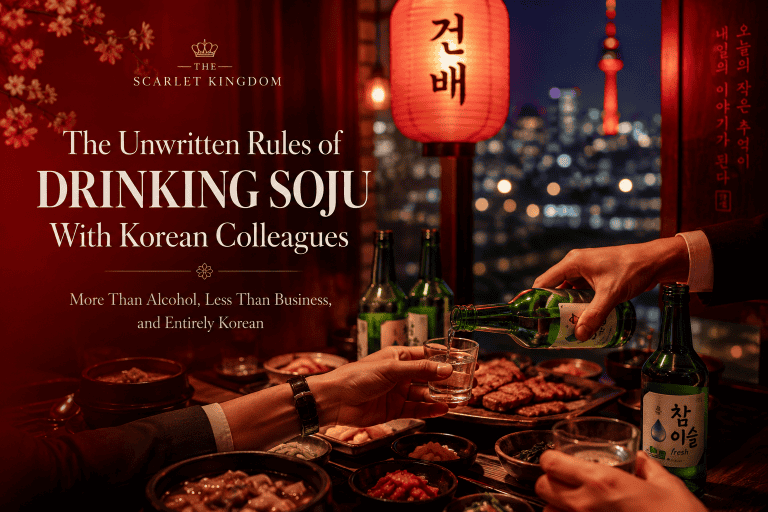
Small green bottles of Korea’s famous spirit appear almost everywhere — convenience stores, luxury restaurants, rooftop bars, tiny pubs hidden beneath neon signs. Smooth, affordable, and deeply symbolic, soju has become part of modern Korean identity itself.
But the drink alone is not what matters.
It is the ritual around it.
Pouring drinks for others before yourself. Turning slightly away from elders while drinking as a sign of respect. Raising glasses together after long conversations. Tiny traditions passed quietly between generations.
Even nightlife in South Korea carries etiquette and emotional nuance.
That balance between modern energy and traditional values is part of what makes Korean culture so captivating.
The Loneliness Hidden Inside Seoul Nights
Yet beneath all the beauty, Korean nightlife also reflects something deeper about modern urban life.
Seoul moves incredibly fast.
The pressure to succeed can feel relentless. Long work hours, competitive environments, and emotional exhaustion often push people toward nightlife not only for fun, but for escape.
Late-night pubs become temporary sanctuaries.
Places where strangers laugh together beneath neon lights while forgetting, even briefly, the weight waiting outside.
Perhaps that is why Seoul nights feel strangely emotional.
There is glamour, yes.
But also softness.
Loneliness.
Romance.
Ambition.
The city glows beautifully because so many people are trying to survive inside it.
Luxury Nightlife in Modern Korea
In recent years, South Korea’s luxury nightlife scene has evolved dramatically.
Seoul now rivals some of the world’s most stylish nightlife capitals with elegant cocktail bars, luxury hotel lounges, rooftop champagne evenings, and curated aesthetic spaces designed almost like film sets.
Minimalist interiors inspired by Japanese design. Velvet seating beneath warm amber lighting. Signature cocktails infused with Korean ingredients like yuzu, plum, and green tea. Fashionable crowds dressed in understated elegance rather than loud extravagance.
Korean luxury nightlife feels intentional.
Stylish without trying too hard.
Sophisticated without becoming cold.
Even luxury in Seoul often carries emotional warmth — something many modern cities have quietly lost.
Why Korean Pub Culture Fascinates the World
Perhaps the reason global audiences are so drawn toward Korean nightlife is because it feels cinematic.
Korean dramas constantly romanticize late-night conversations beneath glowing city lights. Characters sit inside quiet pubs sharing secrets over ramen and soju while rain taps softly against windows. Emotional moments unfold in tiny restaurants illuminated by neon signs.
And surprisingly, real life in Seoul often feels exactly like that.
The atmosphere exists.
The emotion exists.
The beauty exists.
Korean nightlife is not perfect, but it understands something important:
people are not only searching for excitement.
They are searching for belonging.
Final Thoughts
As midnight fades into early morning, Seoul still refuses to sleep.
Taxi lights blur through crowded streets while strangers continue wandering between cafés, bars, karaoke rooms, and convenience stores glowing softly beneath the night sky. Somewhere above the city, music drifts from rooftop lounges while conversations continue long after the final trains disappear.
South Korea’s pub culture is not simply about alcohol.
It is about atmosphere.
Connection.
Escape.
And the beautiful human desire to feel less alone at the end of a long day.
Perhaps that is why Seoul nights stay with people long after they leave.
Because some cities are visited.
But others are felt.
—
The Scarlet Kingdom
Luxury. Lifestyle. Culture.